Veeva Alternatives: Competitive Positioning for Healthcare Buyers

ai in healthcare

Below is a buyer-grade, dealbreaker-focused comparison of the major AI eQMS platforms — Veeva, KneatGx, ValGenesis and Res_Q (by Sware) . Framed specifically for the way pharma and biotech decision-makers think about risk, credibility, political/regulatory safety, partner alignment, and where deals actually stall or die. This is not a marketing summary; it emphasises real pain points and objections that can stop procurement, partnerships, or deep integration.

Who are those competitive positioning pages for?

This page is for senior leaders in pharma and biotech evaluating whether Veeva is a viable partner or alternative in AI‑enabled eQMS. It helps decision‑makers assess Veeva’s claims, risk profile, and fit within existing R&D strategies without repeating vendor marketing or ranking providers. The content is analytical, not promotional or investment advice, designed to support evidence‑based shortlisting rather than endorsement.

How to use this page

This page is written for cross‑functional evaluation teams in pharma and biotech who need to understand how Veeva compares with alternative AI‑enabled eQMS and validation platforms.

  • Scientific leadership (for example, QA, validation, and regulatory heads) should focus on ā€œSection 1. Clinical Proof & Regulatory Validationā€ and ā€œSection 2. Scientific Transparency & Explainabilityā€, which cover inspection‑readiness, CSV/CSA pathways, AI explainability, and the main scientific and regulatory dealbreakers.

  • Business development and portfolio strategy teams should focus on ā€œSection 3. Integration & Workflow Interoperabilityā€, ā€œSection 4. Data Governance, Compliance & IP Ownershipā€, and ā€œSection 5. Quantifying ROI: Time, Cost, and Success Ratesā€, which address ecosystem fit, data and IP control, and when KneatGx versus other options is commercially and politically safest.

  • IT, data, and digital leaders should focus on ā€œSection 3. Integration & Workflow Interoperabilityā€ and the risk themes highlighted in ā€œFinal Summary: Where AI eQMS Deals Actually Failā€, which together cover integration with SAP/LIMS/MES/Veeva, workflow impact, governance expectations, and the practical drivers of approval or rejection across enterprise stakeholders.

The guide reflects how buyers commonly assess risk, fit, and enterprise impact, and is intended to summarise prevailing market evidence and deal dynamics rather than to formally endorse or reject any vendor.

Get a neutral, no obligation view of whether this AI tool fits your portfolio

Avatar

Stephen

Founder of HealthyData.Science Ā· 20+ years in life sciences compliance & software validation Ā· MSc in Data Science & Artificial Intelligence.

Evidence this page draws on

This guide is based on Veeva’s own published materials and real‑world quality‑transformation results from life sciences organisations, including the press release ā€œMore than 180 life sciences companies adopt Veeva Vault Qualityā€. It draws particularly on Veeva case studies describing digital quality transformation and unified QMS deployments, as well as independent implementation write‑ups from specialist consultancies. Outbound links are provided throughout so that readers can review the underlying evidence and form their own view on its strength and relevance

1. Clinical Proof & Regulatory Validation (The #1 Buyer Filter)

Core Buyer Question: ā€œIs this already trusted at scale in pharma—and will it survive inspection without debate?ā€

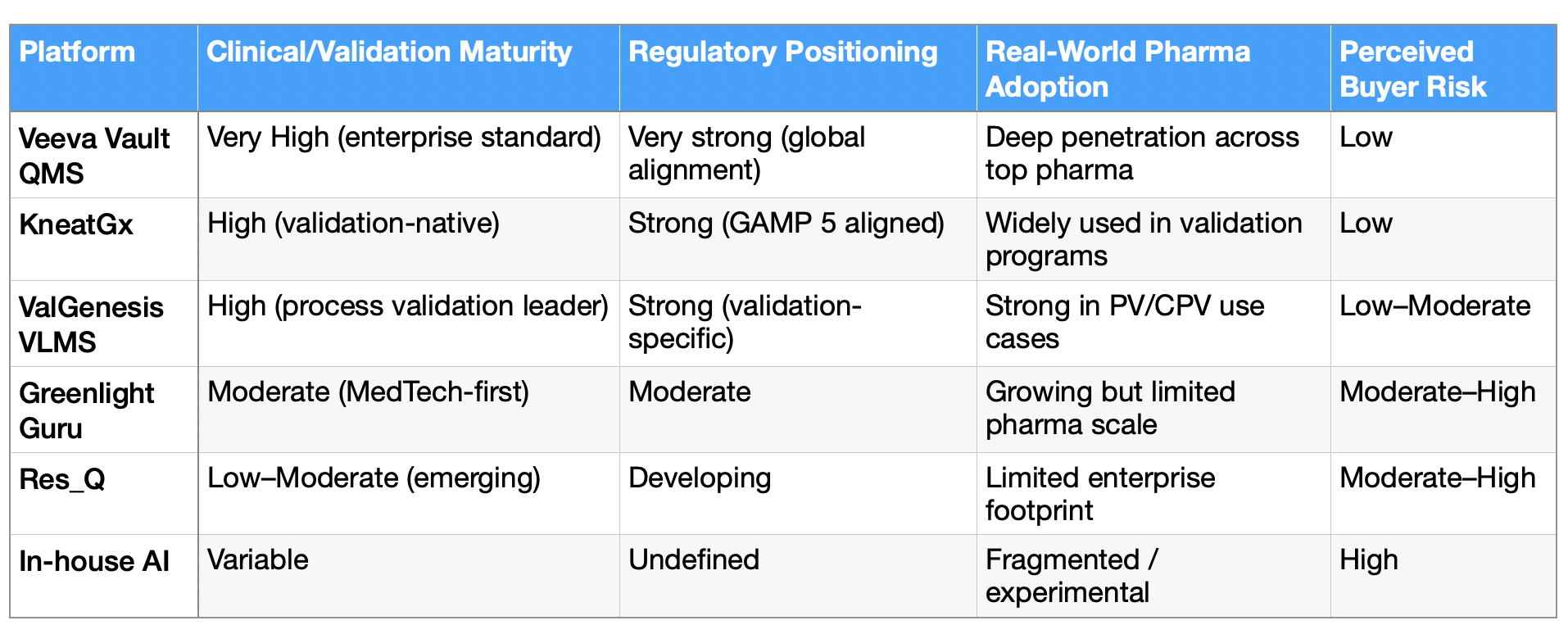
Table 1: Overview – Clinical Proof, Regulatory Positioning, Real-World Risk (2026)

Platform Clinical/Validation Maturity Regulatory Positioning Real-World Pharma Adoption Perceived Buyer Risk Veeva Vault QMS Very High (enterprise standard) Very strong (global alignment) Deep penetration across top pharma Low KneatGx High (validation-native) Strong (GAMP 5 aligned) Widely used in validation programs Low ValGenesis VLMS High (process validation leader) Strong (validation-specific) Strong in PV/CPV use cases Low–Moderate Greenlight Guru Moderate (MedTech-first) Moderate Growing but limited pharma scale Moderate–High Res_Q Low–Moderate (emerging) Developing Limited enterprise footprint Moderate–High In-house AI Variable Undefined Fragmented / experimental High
Table comparing major pharma validation and quality management platforms (Veeva Vault QMS, KneatGx, ValGenesis VLMS, Greenlight Guru, Res_Q and in‑house AI) across clinical/validation maturity, regulatory positioning, real‑world pharma adoption and perceived buyer risk.

Where Deals Stall for Veeva

  • Perception of being broad but not validation-specialized
  • Concerns that validation workflows may require additional configuration or external tools
  • Risk of ā€œover-platformingā€ vs targeted validation solutions

Buyer Reality

Veeva passes the credibility filter immediately—but deeper evaluation often shifts to:

ā€œIs this the best tool for validation, or just the safest enterprise choice?ā€

Veeva passes the credibility filter immediately, supported by more than 180 life sciences companies adopting Veeva Vault Quality Applications to modernize quality management. [1]

Veeva’s case studies show harmonised deviation, audit, lab investigation, and change-control processes on Vault QMS, reducing procedures and consolidating suppliers. [2]


2. Scientific Transparency & Explainability (Regulatory + Partner Demand)

Core Buyer Question: ā€œCan we explain exactly how outputs are generated—and defend them under inspection?ā€

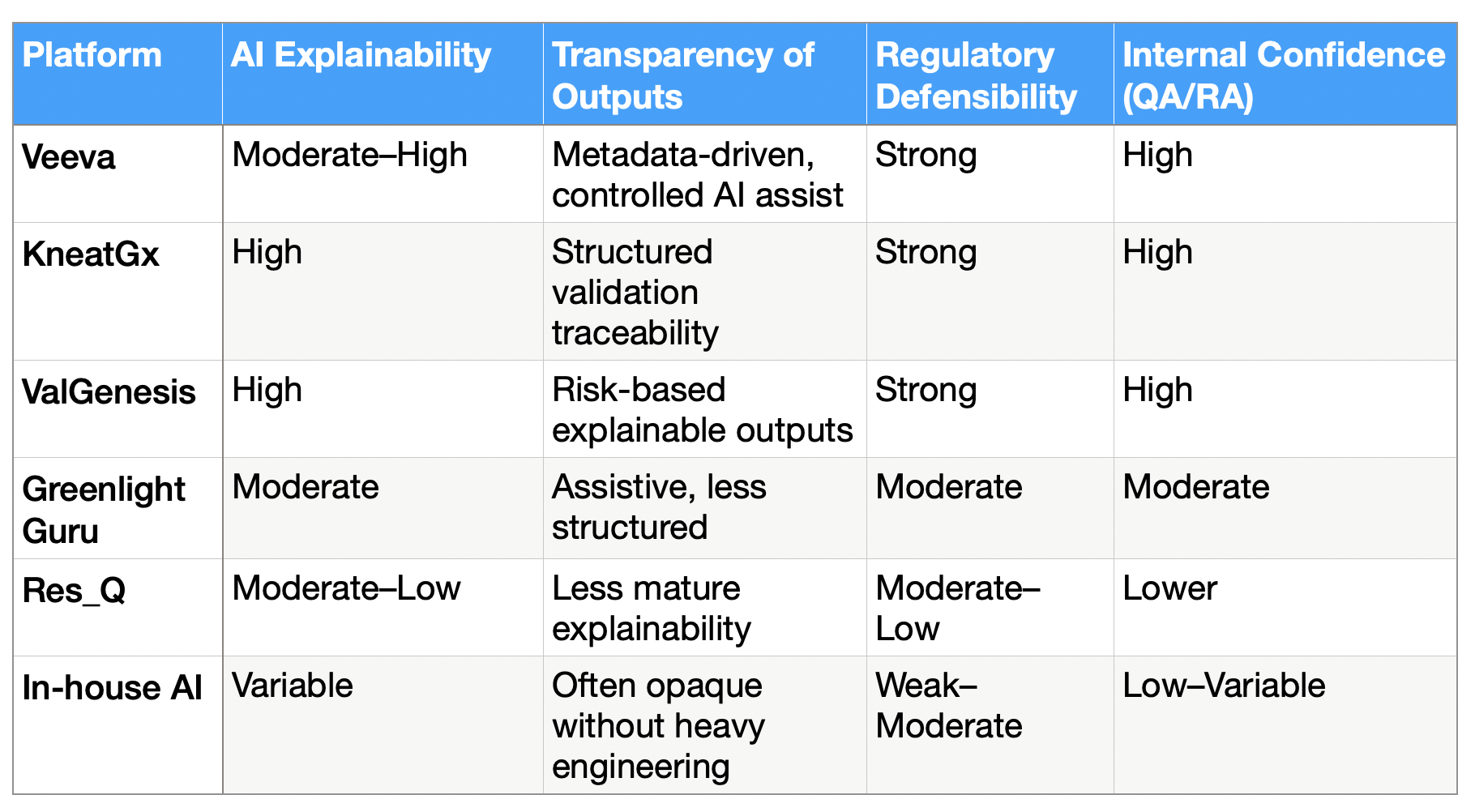
Table 2: Explainability ComparisonĀ 

Clinical and regulatory comparison table of leading pharma validation platforms including Veeva Vault QMS, KneatGx, ValGenesis VLMS, Greenlight Guru, Res_Q and in‑house AI, showing maturity, regulatory positioning, adoption and buyer risk.
Table comparing major pharma validation and quality management platforms (Veeva Vault QMS, KneatGx, ValGenesis VLMS, Greenlight Guru, Res_Q and in‑house AI) across clinical/validation maturity, regulatory positioning, real‑world pharma adoption and perceived buyer risk.

Ā 

Where Deals Stall for Veeva

  • AI perceived as incremental enhancement vs core validation intelligence
  • Lack of deep validation-specific explainability compared to KneatGx/ValGenesis
  • Questions around how AI outputs map to validation rationale

Key Dealbreaker

If AI cannot be tied to traceable, validation-ready logic, QA may limit or reject its use. Veeva’s QMS help documentation shows audit trails, electronic signatures, and reasons for change are implemented to support traceability and data integrity. [3]


3. Integration & Workflow Interoperability

Core Buyer Question: ā€œWill this integrate seamlessly across our ecosystem without breaking validated processes?ā€

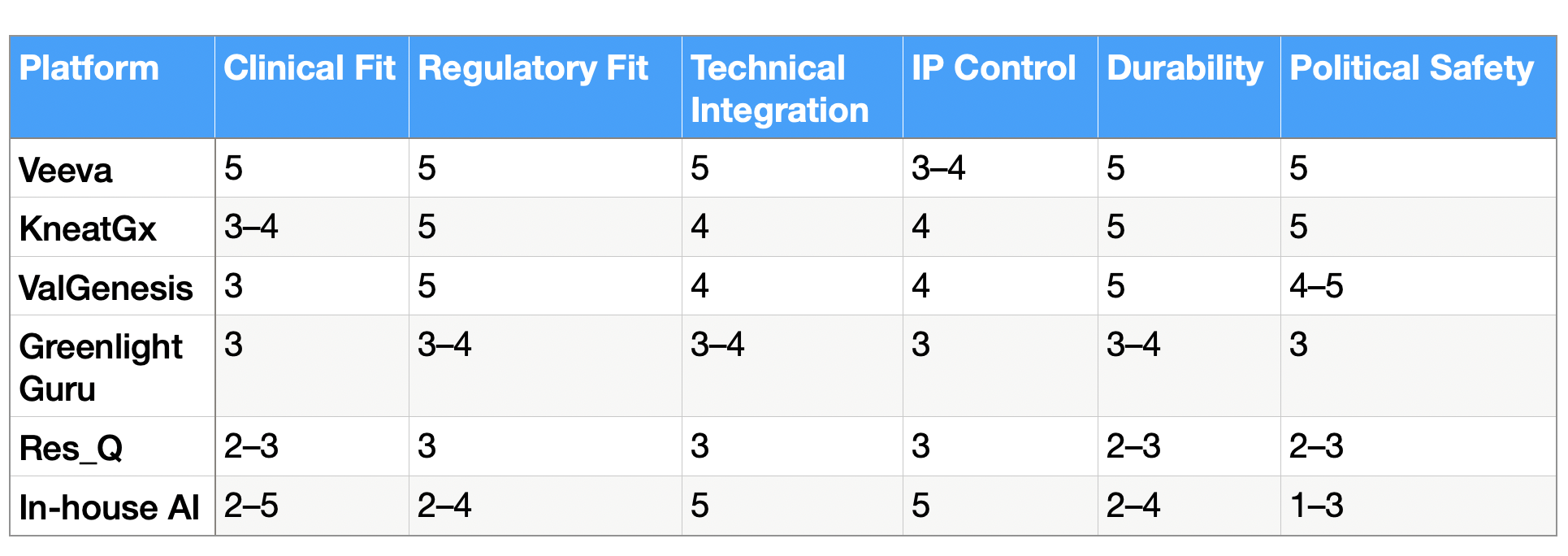
Table 3: Scoring (1–5 scale; 5 = strongest)

Scorecard table comparing Veeva, KneatGx, ValGenesis, Greenlight Guru, Res_Q and in‑house AI across clinical fit, regulatory fit, technical integration, IP control, durability and political safety on a 1–5 scale.
Table showing relative scores (1–5 scale, including ranges) for six validation and QMS platform options—Veeva, KneatGx, ValGenesis, Greenlight Guru, Res_Q and in‑house AI—across clinical fit, regulatory fit, technical integration, IP control, durability and political safety.

Note:Ā The scores presented reflect relative buyer risk and internal defensibility in regulated pharma and biotech environments, rather than feature completeness or vendor claims. They are based on alignment with established regulatory frameworks (e.g., GAMP 5, FDA 21 CFR Part 11, EU Annex 11), observed market adoption across validated GxP environments, and the practical realities of enterprise decision-making—particularly the likelihood of approval across Quality, IT, Regulatory, and Procurement functions. As no standardised benchmark dataset exists for AI-enabled eQMS platforms, these scores represent a structured, evidence-informed assessment of how each option is likely to perform under real-world validation, inspection, and internal approval scrutiny.

Where Deals Stall for Veeva

  • Integration is strong—but: a Clarkston Consulting implementation for a gene-therapy company highlights validation approach, integration with regulatory information management, and typical project risks and mitigations. [4]
    • May lock organisations deeper into the Vault ecosystem
    • Can require significant implementation effort
  • Validation-specific workflows may still require augmentation (e.g., KneatGx)

Political Reality

  • IT strongly favours Veeva; QA approves due to credibility, but Veeva’s 3 case studies on digital quality transformation show pharma manufacturers using Vault QMS to standardise global quality processes and shorten cycle times. [5]
  • QA approves due to credibility
  • BUT validation teams may advocate for best-of-breed tools

4. Data Governance, Compliance & IP Ownership

Core Buyer Question: ā€œWho controls our data—and are we creating long-term dependency risk?ā€

Platform Comparison Insights

Veeva

  • Enterprise-grade governance and compliance with strong controls for access, audit trails, and data integrity are outlined in Veeva’s QMS product overview. [6]Ā 
  • Strong controls for:
    • Access
    • Audit trails
    • Data integrity
  • Key concern: long-term platform centralisation and vendor lock-in

KneatGx

  • Strong governance for validation artifacts
  • Clear ownership and traceability
  • Lower perceived lock-in risk vs full platform ecosystems

ValGenesis

  • Strong validation-specific governance
  • High confidence in lifecycle traceability

Greenlight Guru

  • Adequate governance for QMS
  • Less mature in complex validation/IP scenarios

Res_Q

  • Developing governance maturity
  • Depends heavily on configuration

In-house AI

  • Full theoretical IP control
  • Highest burden:
    • Governance
    • Compliance validation
    • Audit readiness

Where Deals Stall for Veeva

  • Legal/IT concerns about data centralization and vendor dependency are framed by Veeva’s unified-platform architecture for non-conformances, CAPA, audits, complaints, supplier management, and change control: [7]
    • Data centralization
    • Vendor dependency
  • Questions around AI data usage transparency

5. Quantifying ROI: Time, Cost, and Success Rates

Core Buyer Question: ā€œWhat can we safely commit to—and what upside is realistically achievable?ā€

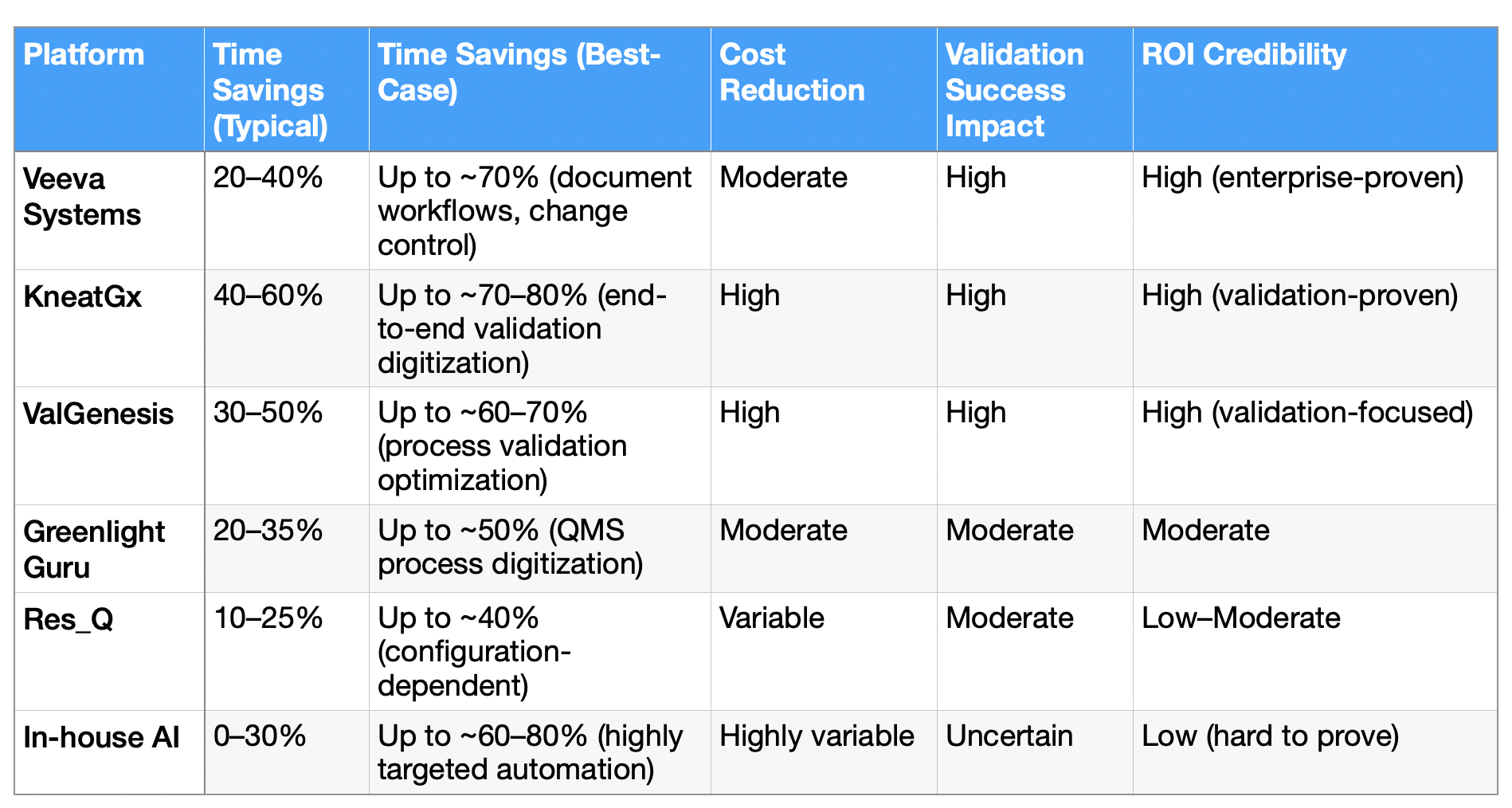
Table 4: ROI Comparison

Outcome comparison table showing typical and best‑case time savings, cost reduction, validation success impact and ROI credibility for Veeva Systems, KneatGx, ValGenesis, Greenlight Guru, Res_Q and in‑house AI validation platforms.
Table summarising typical and best‑case time savings, cost reduction, validation success impact and ROI credibility for six validation platform options—Veeva Systems, KneatGx, ValGenesis, Greenlight Guru, Res_Q and in‑house AI.

Ā 

How to Interpret This (Buyer Reality)

ā€œTypicalā€ = What You Can Safely Put in a Business Case

Typical’ numbers survive finance validation, reflecting partial adoption and real-world friction, and are supported by Veeva’s 3 case studies on digital quality transformation showing shortened cycle times. [8]

  • Survives finance validation
  • Reflects partial adoption + real-world friction
  • Accounts for:
    • Validation overhead (CSV/CSA)
    • Change management
    • Cross-functional rollout

This is what gets approved.


ā€œBest-Caseā€ = Where Vendors Win Deals (But Also Lose Them)

These numbers usually come from:

  • Highly optimised workflows
  • Greenfield implementations
  • Narrow use cases (e.g., document approvals, protocol generation)

These are:

  • Real—but not universal
  • Often challenged during procurement

Platform-Specific Reality (Where Deals Get Challenged)

Veeva Systems

Veeva Systems’ best-case strength in document and QMS workflows is grounded in Veeva’s unified QMS case study showing harmonised deviation, audit, lab investigation, and change-control processes. [9]

  • Best-case strong in document + QMS workflows
  • Challenge: ā€œShow me 70% across validation—not just documentsā€

We are modelling ROI on conservative, inspection-defensible assumptions, with upside potential in targeted workflows
Where Deals Stall for Veeva

  • ROI perceived as:
    • Strong for QMS standardisation
    • Less compelling for validation transformation
  • High upfront:
    • Implementation cost
    • Change management effort

Final Summary: Where AI eQMS Deals Actually Fail

Table 5: Dealbreaker Summary

Outcome comparison table showing time savings, cost reduction, validation success impact and ROI credibility for Veeva, KneatGx, ValGenesis, Greenlight Guru, Res_Q and in‑house AI validation platforms.
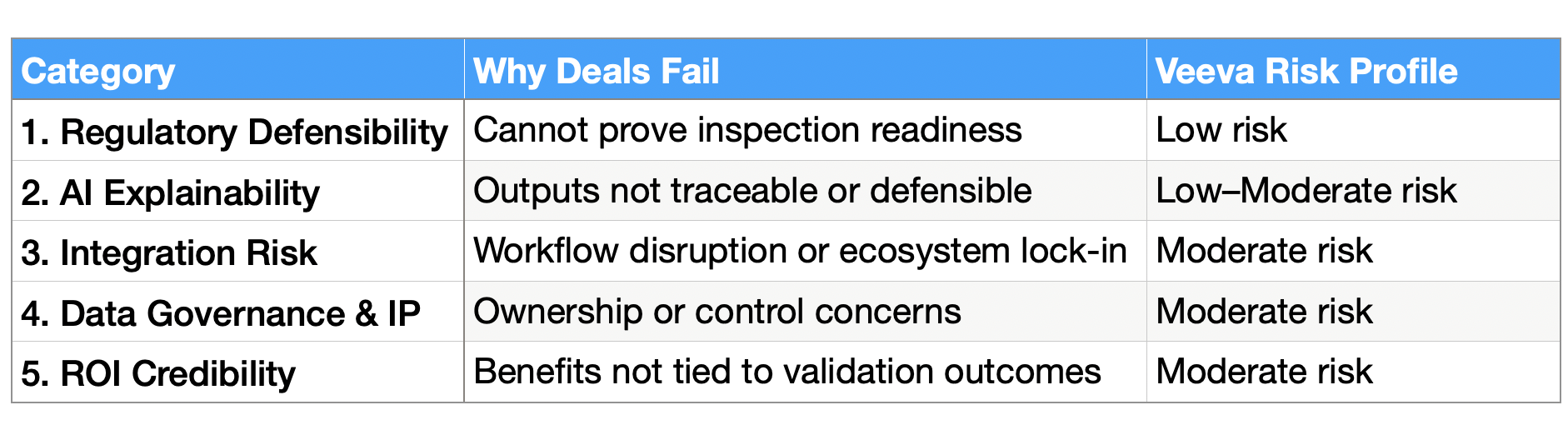
Table summarising estimated regulatory defensibility, AI explainability, integration risk, data governance and IP and ROI credibility for Veeva.

Bottom-Line Buyer Reality

  • Veeva Systems: Safest enterprise choice; strongest political and regulatory defensibility, but may be over-scoped for validation-specific needs. Veeva Systems is the safest enterprise choice, supported by more than 180 life sciences companies adopting Vault Quality Applications to modernize quality management. [10]
  • KneatGx: Best-in-class for validation; often complements rather than replaces Veeva. KneatGx is positioned as best-in-class for validation, and a Clarkston Consulting write-up highlights validation approach, integration with regulatory information management, and implementation risks. [11]
  • ValGenesis: Strong validation depth; particularly in process validation
  • Greenlight Guru: Strong QMS, weaker pharma validation credibility
  • Res_Q: Flexible but higher perceived risk due to maturity
  • In-house AI: Strategically appealing but highest failure rate at validation, governance, and approval stages. In-house AI is strategically appealing but carries the highest burden in governance, compliance validation, and audit readiness, as reflected in Veeva’s product overview and Help documentation. [12]

Evidence & further reading (for due diligence teams)

Medical‑device eQMS implementation and FDA‑facing expectations
The EMMA International case study (2024 ) describes how a medical‑device client implemented an eQMS based on Veeva technology to improve data integrity and regulatory alignment, offering further insight into validation strategy, implementation timelines, and FDA‑facing expectations, particularly relevant for buyers comparing Veeva’s QMS depth against MedTech‑focused platforms like Greenlight Guru and validation‑focused platforms like Kneat Gx.

Comparative eQMS context in regulated healthcare
The independent article ā€œThe 5 Best eQMS Platforms for Regulated Healthcare and Life Sciences (and When to Pick Each One)ā€ (HealthyData.Sci, 2026) positions Veeva among leading eQMS options, and notes its design for life‑sciences GxP environments and its use by top‑tier pharma and biotech, which can help due diligence teams benchmark vendor maturity, integration patterns, and strategic fit against alternative platforms.Ā 

For a deeper dive into Veeva’s core platform capabilities and evidence base, see our main Veeva listing, Veeva Vault Validation Management: The Secret Weapon Cutting Validation Times by 70%.

For buyer FAQs on whether Veeva’s AI‑enabled eQMS can meet pharma, biotech, and MedTech expectations for AI governance, validation, and inspection‑ready compliance, and where it may still present dealbreaker risks, seeĀ Veeva Buyer FAQs: Dealbreaker Questions Answered.

This buyer guide comparison of Veeva vs key competitors first appeared on HealthyData.Science and major search indexes, and is protected as original, independently curated content.

Disclaimer

This page is for information only and does not constitute regulatory, clinical, or commercial advice. The assessments and comparisons are based on publicly available information and vendor inputs at the time of writing and may change without notice. Organisations should conduct their own technical, legal, and governance due diligence before selecting or deploying any AI solutions in healthcare.

Let’s explore the right AI solutions in healthcare and life sciences for your workflows

  1. More than 180 life sciences companies, including 10 of the top 20 global pharmaceutical organizations, have adopted Veeva Vault Quality applications to modernize their processes. This broad cloud-platform adoption demonstrates industry validation and a significant market shift toward unifying cross-functional quality documents and workflows. Veeva Systems. (2018). More than 180 Life Sciences Companies Adopt Veeva Vault Quality Applications to Modernize Quality Processes[]
  2. Adopting Veeva Vault QMS allowed a global life sciences company to harmonize disparate regional workflows into unified, global processes for deviations, audits, laboratory investigations, and change controls. This centralization reduced total quality procedures and successfully consolidated legacy point solutions under a single vendor. Veeva Systems. (2025). Empowering Quality Teams with Unified QMS and Data[]
  3. Veeva QMS maintains compliance and data integrity using detailed audit trails that record system activities, including electronic signature execution and workflow state changes. Additionally, administrators can configure the platform to mandate that users enter a specific reason for change whenever object fields are modified. Veeva Systems. (2026). QMS Overview | Veeva Vault Help[]
  4. Clarkston Consulting guided a pre-commercial gene-therapy company through the simultaneous implementation and validation of Veeva Vault QualityDocs and RIMS. The project established compliant, out-of-the-box content structures, updated electronic record governance processes, and delivered user training to mitigate business adoption risks during clinical scale-up. Clarkston Consulting. (2022). Veeva Vault QualityDocs and RIMS Implementation for Cell and Gene Therapy Company[]
  5. Life sciences organizations utilizing Veeva Vault QMS successfully replaced legacy, siloed systems to standardize cross-functional and global quality management workflows. This transition unified disparate operational sites on a single platform, eliminating process bottlenecks and significantly accelerating operational cycle times. Veeva Systems. (2021). 3 Case Studies on Digital Quality Transformation[]
  6. Veeva Vault QMS provides built-in governance through automated tracking of deviations, complaints, and corrective actions on a secure architecture. The platform ensures data integrity and regulatory compliance by utilizing strict access controls, permanent electronic signatures, and comprehensive audit trails for all system actions. Veeva Systems. (2026). MedTech Quality Management System (QMS) Overview[]
  7. Veeva Vault QMS provides built-in governance through automated tracking of deviations, complaints, and corrective actions on a secure architecture. The platform ensures data integrity and regulatory compliance by utilizing strict access controls, permanent electronic signatures, and comprehensive audit trails for all system actions. Veeva Systems. (2026). MedTech Quality Management System (QMS) Overview[]
  8. Veeva Vault QMS deployment case studies across pharmaceutical manufacturers demonstrate quantified operational efficiencies, specifically showcasing accelerated cycle times for key quality events. This real-world evidence validates the business case for replacing disparate, legacy systems with a unified digital ecosystem across global manufacturing locations. Veeva Systems. (2021). 3 Case Studies on Digital Quality Transformation[]
  9. An enterprise deployment of Veeva Vault QMS successfully harmonized disparate operational workflows across deviations, internal and external audits, laboratory investigations, and change control. Utilizing a unified quality platform eliminated siloed execution, driving cross-functional standardisation and process consistency across global manufacturing sites. Veeva Systems. (2023). Empowering Quality Teams with Unified QMS and Data[]
  10. More than 180 life sciences companies, including 10 of the top 20 global pharmaceutical organizations, have adopted Veeva Vault Quality applications to modernize their processes. This broad cloud-platform adoption demonstrates industry validation and a significant market shift toward unifying cross-functional quality documents and workflows. Veeva Systems. (2018). More than 180 Life Sciences Companies Adopt Veeva Vault Quality Applications to Modernize Quality Processes[]
  11. Clarkston Consulting highlights a structured system validation and governance strategy during the dual implementation of Veeva Vault QualityDocs and regulatory information management (RIMS). This approach outlines how mitigating deployment risks through customized test scripts and automated workflows streamlines data substantiation and cross-functional documentation control. Clarkston Consulting. (2022). Veeva Vault QualityDocs and RIMS Implementation[]
  12. Veeva Quality QMS documentation outlines how platform-managed audit trails, validated workflows, and rigorous record history configurations automate data integrity. In contrast, in-house systems lack these natively unified features, increasing corporate exposure to complex data governance, strict compliance validation, and continuous audit-readiness burdens. Veeva Systems. (2024). Vault Quality Help: Quality Management Software Documentation[]
error: Data is Protected!