
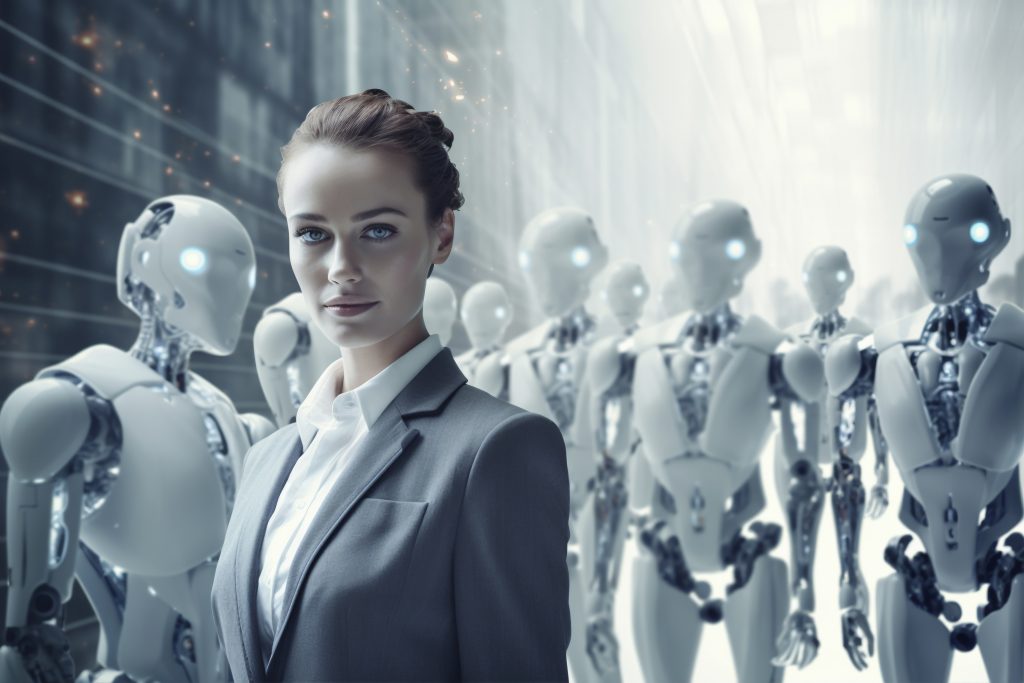
TLDR
This piece examines how AI is reshaping predominantly white‑collar work, including in healthcare and life sciences, by automating pattern recognition, routine analysis, and standardised creative tasks rather than hands‑on roles.
The main impact is a shift in workforce value towards relationship‑driven work, complex judgment, and genuinely creative or hybrid human–machine roles, with professionals expected to become power users of AI rather than be replaced by it.
Leaders should evaluate where AI can augment existing roles, which critical “human” skills to develop, how to upskill staff in AI literacy, and how fast their organisation needs to adapt to avoid falling behind more AI‑mature competitors.
Let’s be honest. The question “will AI affect jobs?” is no longer a far-off concern. It’s happening right now, in offices just like yours.
Here’s what’s wild: everyone’s worried about robots taking over factories, but the real disruption? It’s happening to people in suits. AI is quietly reshaping white-collar work faster than anyone expected, and most of us are still pretending it’s not our problem. [1]
Blue Collar vs. White Collar: Why This Job Crisis Is Different
Past tech revolutions hit physical jobs first. Steam engines replaced muscle power. Assembly lines got automated. We could see it coming.
This time? Everything’s backwards.
Your plumber isn’t worried about AI. Neither is your electrician nor the person fixing your car (though EVs might give them more coffee breaks). But the lawyer doing research? The analyst crunching numbers? The marketing coordinator writing copy? They should be paying attention.
AIs are really good at thinking tasks. The irony? Jobs that require years of education are often easier to automate than jobs that require getting your hands dirty. [1, 5 & 17]
The Current Reality: How AI Is Already Transforming Work
Don’t look now, but the AI job market transformation is already underway. It’s just sneaky about it.
Banks use AI for fraud detection. Marketing teams let AI write their first drafts. Hospitals have AI reading X-rays. It’s not replacing entire jobs yet; it’s making one person do the work of three.
Think about it: one marketer with AI tools can now handle what used to require a whole team. That’s not necessarily bad, but it definitely changes the math on headcount.
The jobs getting hit hardest? Anything involving:
- Pattern recognition
- Data analysis
- Routine decisions
- Standardised creative work
Accounting, junior legal work, basic journalism, customer service, they’re all feeling the squeeze. [1, 3, 4, 10, 11, 16, 17]
The Skills That Actually Matter Now
Here’s the thing about understanding will AI affect employment: you need to know what humans still do better.
Relationship stuff is safe. Salespeople who actually connect with clients? Therapists? Teachers who inspire kids? AI can’t fake that human touch. Not yet, anyway.
Real creative thinking matters more than ever. Not just following templates, but actual breakthrough ideas and strategic vision. AI can rearrange existing patterns, but it can’t dream up the next big thing.
Hands-on expertise combined with know-how is golden. Surgeons, skilled craftspeople, technicians, they’re sitting pretty because AI can’t replicate that combo of brain and dexterity. [5, 6, 13, 14, 20]
What Smart People Are Doing Right Now
Instead of fighting AI, the smartest professionals are figuring out how to dance with it.
They’re becoming AI power users. Accountants who master AI analytics focus on strategy instead of spreadsheets. Writers use AI for research and first drafts, then add the human magic that actually matters.
They’re building meta-skills that work regardless of the tech. Critical thinking. Communication. Leadership. Adaptability. These never go out of style.
They’re doubling down on the human stuff. What parts of your job need actual human judgment? Creativity? People skills? Lean into those hard. [6, 13, 14]
What This Means for Your Industry
Professional services are getting shaken up. Law firms use AI for document review. Consulting companies let AI crunch the numbers. But client relationships? Strategy? Complex negotiations? Still very human.
Healthcare’s a mixed bag. AI helps with diagnosis and treatment plans, but try getting a machine to hold your hand when you’re scared. Patient care and complex medical decisions aren’t going anywhere.
Creative industries are nervous, and they should be. AI can pump out basic content all day. But meaningful work that actually connects with people? That still needs a human brain and heart behind it. [2, 8, 10, 12, 16]
Your Move: Preparing for Tomorrow’s Workplace Today
The AI job market evolution isn’t waiting for you to catch up. Time to get proactive.
Start with an honest audit. Which of your tasks could AI handle? Which ones absolutely need you? Focus your energy on the “absolutely need you” stuff.
Learn from the early adopters. Find people in your field who are already using AI successfully. Buy them coffee. Pick their brains.
Get AI-curious. You don’t need to build the models. But knowing how AI works and where it fails makes you invaluable as the bridge between tech and business [7, 15, 16].
The Bottom Line
Will AI affect jobs? Absolutely. But here’s what the doomsday headlines miss: this isn’t about humans vs. machines.
It’s about humans WITH machines.
The professionals thriving five years from now won’t be the ones who ignored AI or the ones who got replaced by it. They’ll be the ones who figured out how to make AI make them better at being human.
Your move, steering committee. The early adopters are already pulling ahead. How long can you afford to wait?
The future workplace isn’t coming, it’s here. The question isn’t whether you’ll adapt. It’s how quickly you’ll start… [7, 15]
Discover our curated list to see how industry leaders are accelerating timelines, implementing AI solutions in healthcare and gaining a competitive edge. Follow us for more actionable AI insights shaping the future of life sciences and AI in healthcare.
References
AI’s Impact on White-Collar Professionals: Risks & Opportunities, Forbes, 2025-03-01
Emerging Roles in the Legal Profession Due to AI Integration, LinkedIn, 2025-03-02
The Transformative Applications of AI in Marketing for Banks, InvestGlass, 2024-08-07
How Generative AI Will Change Jobs In Healthcare, Forbes
Top 65 Jobs Safest from AI & Robot Automation, U.S. Career Institute, 2022-12-31
Human Skills vs. AI Skills: Future-Proofing Your Tech Job, Talent500, 2025-04-01
AI adoption surges to 72% among professionals, The CFO, 2025-06-02
AI Revolution in Creative Industries: Tools & Trends 2025, Futuramo, 2025-07-27
How AI is Causing a White Collar Bloodbath, YouTube, 2025-06-02
See what legal professionals say about AI and law, Thomson Reuters, 2025-09-01
The Pros and Cons of AI in the Bank Marketing World, WSI Digital, 2023-10-08
4 Ways That AI Could Transform Healthcare Roles, LinkedIn, 2024-04-17
What Tech Jobs Will Be Safe From AI, Smythos, 2025-08-25
Why Human Skills Beat Qualifications In The Age Of AI, Forbes, 2025-06-01
The AI Adoption Reality Check: Firms with AI Strategies are Twice as…, Thomson Reuters, 2025-06-25
AI in Professional Services: How Automation Is Reshaping…, Hubstaff, 2025-06-18
AI jobs danger: Sleepwalking into a white-collar bloodbath, Axios, 2025-05-27
Law Firm Automation: Transforming Legal Practices Today, Global Law Experts, 2025-03-26
How AI Generates Irresistible, Tailored Bank Marketing Messages, The Financial Brand, 2025-03-06
How Artificial Intelligence is Transforming the Healthcare Industry, Lovely Professional University, 2025-06-04

Author: Stephen
Founder of HealthyData.Science · 20+ years in life sciences compliance & software validation · MSc in Data Science & Artificial Intelligence.